
 Yong's latest book, A Gift, which he both wrote and illustrated, was published in September to favorable reviews in Booklist, ForeWord Magazine and School Library Journal. It is a story of a gift that has arrived for Amy just in time for Chinese New Year... Click here to view the watercolor paintings.
|
In this video showcase the oil paintings was created during the year of 2012 and was displayed in the exhibit at the Bannister Gallery. The exhibit's theme was "Carrying the Dream - An Immigrant's Experience" which base on my personal journey since I moved to the United States from China...
|
|
|
I have been through many jobs, from supermarket clerk, assistant in a Chinese restaurant, bus-boy in Chinatown, medical college lab assistant, freelance graphic designer, digital illustrator, art director... to lately a college professor...
|
|
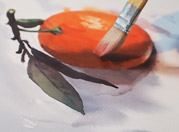
Watercolor Class: Painting a Mandarin Orange The first full watercolor class now available for you online and on DVD. In this watercolor painting class, watercolorist Yong Chen used a mandarin orange as subject matter to show you the practical watercolor techniques and the working process to ensure you to be able to finish your painting to your expectation.
|
|
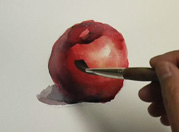 |
Watercolor Lesson: Painting a Red Apple In this watercolor technique video demonstration, Yong shared his painting process/methods of painting a single object still-life of a red apple. You will go through the entire process of painting an apple from drawing to finish with Yong...
|
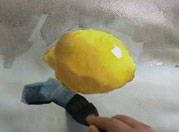 |
Watercolor Lesson: Painting a Lemon This is a full video watercolor lesson. With the artist's narration, you will go through the entire process of painting a yellow lemon from start to finish with Yong. We also include a picture of the lemon which you can download it and do the painting following the steps in the videos...
|
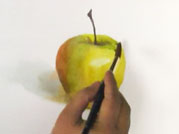 |
Painting a Yellow Apple in Watercolor You will start with the prctice of wet-into-wet, wet-on-dry, and lifting-off basic watercolor techniques. Then artist Yong Chen will bring you through the five steps: drawing, first wash with Wet-into-Wet, shadow and color balance, adjust value contrast, and final touches to finish the watercolor still-life. Now, turn up your computer sound volume, get ready and have fun...
|
 |
In this special production of Nashua Television, artist and educator, Yong Chen unveiled the inspiration and stories behind some of his recent watercolor paintings. Special thanks to all my teachers, friends, and classmates from Hartford Art School Limited Residency MFA in Illustration, for all the good time we had. We hope you enjoy this presentation. Love art, and live in it...
|
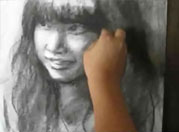 |
Doing a portrait has two basic challenges, one is the likeness, another is to embed your feeling and the personality of the person you are drawing. In this quick portrait drawing demonstration, Yong shares with you a drawing process and the techniques to capture the sitter's likeness and personality in a very short time...
|
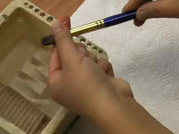 |
Simply Taking Care of our Brushes It is important to take good care of our brushes. Cleaning them each time you used them is a good practice. This will keep your workstation clean and extend the life of the brushes. To store my brushes after they are dried, I use this waterproof nylon case and keep them organized...
|
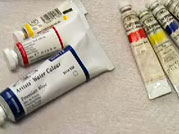 |
Watercolor Paint Quality Matters Paints are priced according to the value of the pigment used in their manufacture, so some colors are more expensive than others. Watercolor paints are available in two basic qualities: students’ and artists’ colors. Students’ colors contain less pure pigment and...
|
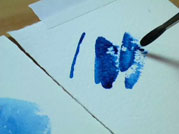 |
A Look on the Defferent Types of Watercolor Papers One of the elements that most affects your painting process and outcome is the paper that you choose to use. Basically watercolor papers are available in three textures: smooth, known as hot-pressed; medium, known as cold-pressed, and rough. Paper is sold by the sheets or in pads and blocks...
|
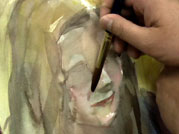 |
Build Up Volume in a Watercolor Portrait Painting He started from a pencil sketch, to form the composition to get the mind to be ready for the painting. Then he started the wash with the base skin-tone color to the face. His thought process as from big relationship to small details, and the painting process that he focus on the balance of value, colors...
|
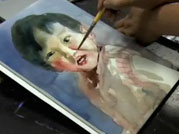 |
Painting a Watercolor Portrait of a Child from Photograph Yong spent time to explain the thought process in the drawing stage, on how to design the composition started from the big shapes to small details, to get the mind to be ready for the painting. Then he started the wash with the base skin-tone color to the face...
|
 |
Painting a landscape from Photo Inspired by the photograph Cheryl took of a beach, Yong wanted to use it to do a quick watercolor landscape painting to demonstrate how he would use a photo reference and combine other elements into a painting.
|
 |
In this demonstration, Yong demonstrated the proper methods to do a drawing for observation step by step. He shown you how he thought at each stage in the process. He pointed out the problems at each step and the solutions to avoid the common mistakes.
|
 |
Yong demonstrated how to observe the high-light area, middle-tone, and dark value areas in a painting. He showed you how to start the first wash to cover most of the painting, and group the areas which have the similar value and tones.
|
 |
Watercolor technique: lifting-off In this video demonstration, Yong showed us a way to correct and improve a watercolor painting after it has been dry, by using the lifting-off technique. Yong used his student's watercolor landscape painting as a sample, step-by-step demonstrate how to use...
|
 |
Watercolor techniques: make-over Yong described the process should start from the idea. He used a pencil to put down the changes that he was going to make to the painting. Then he used lifting-off technique to light-up the areas that were too dark.
|
 |
In this 20 minute watercolor painting, Yong demonstrated the use of complementary colors in the composition and design. In this step-by-step video demonstration, he shown you that the concept and design started from the observation of the personality...
|
 |
Quick watercolor portrait demo #4 A portrait painting of a person who is wearing eye-glasses presents another layer of challenge. Yong used an asian student model in this 20-minute portrait demonstration. He shown you started from drawing, when to ignore the eye-glasses to pursue...
|
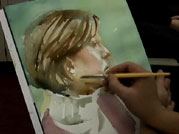 |
Quick watercolor portrait demo #3 Yong planned the process of this quick watercolor portrait painting as using light to dark traditional method. First Yong used a pencil to make the marks on the paper, to organize the thoughts.
|
 |
Still-life watercolor painting Through this watercolor still-life demonstration, Yong used his unique tell and show teaching style, with his easy-to-follow steps, from positioning the painting on paper, manipulating the prop setting in the painting, adding elements to perfect the composition.
|
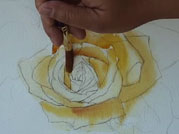 |
Using a round brush with medium among of water, I first get the yellow up to the middle part of the brush, and take the red only with the tip. I lay the brush about 10-degree angle from the paper surface, and move it slowly...
|
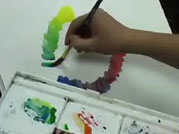 |
In this basic exercise, Yong show you how to complete a color ring of different colors by mixing the three primary colors: Red, Blue, Yellow. Yong demonstrate his simple color mixing theory and method, to introduce...
|
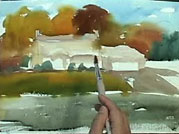 |
Color-Study For a Home Portrait This compressed 4-minute video presentation, shows the steps of my color experiment and my approach to pursue the harmony of the colors. This demonstration was completed in one session...
|
 |
Many watercolor friends expressed that painting a flower is much easier if without the background. Yes, painting one object alone is much easier because we don't need to consider the relationship to other subjects...
|
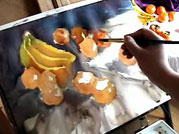 |
Still-life watercolor painting Yong first put yellow into the area for the bananas, then he mixed yellows and reds to define the areas for the mandarin oranges and the two persimmons...
|
 |
This section of practice is using a dry paper without wetting it. There are a few elements affect your watercolor brush marks: water saturation, how much water in the brush with the pigment; brush handling position...
|
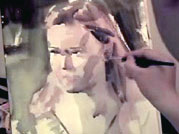 |
A 20-minute watercolor portraiture A friend of mine came from New York and would like to be my model for this portrait painting demonstration. She is very pretty and kind lady. First I started from drawing, a very loose drawing...
|
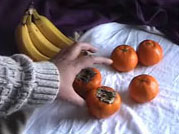 |
How to prop a still-life setting Setting up subjects for a still-life watercolor painting is an important stage of the creative process. It requires time, experimentation and thought. I can easily take one to two hours to set up my props...
|
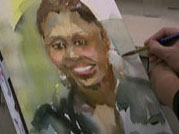 |
Quick watercolor portrait demo #2 To start this quick watercolor portrait painting, I used a pencil to do a rough drawing to outline the layout and define the main elements in the painting. I used a 1.5 inch flat brush to start the first wash...
|
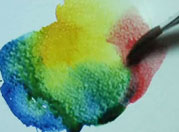 |
Watercolor Technique Demo - Variegated Wash A variegated wash is one uses more than one color. An overlaid wash is a wash applied on top of another layer which has been dried. This technique is also called “wet-on-dry” or “glazing”...
|
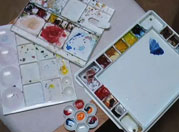 |
Tips on How to Choose a Color Palette Everyone has their own choice for a color palette. It should fit your situation and life style. If you travel a lot, it may make sense to have a compact, lightweight color palette, some even have room for one or two watercolor brushes...
|
 |
Tips on When Should I Clean My Color Palette Usually there is no need to clean up your palettes after each painting session, only at the time when you need to make room for a new color. When I need to make room for new colors, I use a paper towel to clean the area that I need. |
 View this video